Part 1 - “Turn Your Mobile Into the Ball”
1. How can media technologies be evaluated?
In the article they are using usability evaluation that are considering evaluation for Effectiveness, Efficiency and Satisfaction. This is done through user testing by calculating the error-rate when users try to understand the vibration-impulses, by calculating the cognitive delay-time and through questionnaires regarding if the user experienced the tests as positive or negative.
2. What role will prototypes play in research?
Prototypes is a good way to test your idea, and to physically see what is good or bad with it. It’s also a very concrete way of finding out if anything wasn’t experienced as you thought it would be and what problems that occurs. It’s also good for you as a research group to make a prototype to see that you all have the same thing in mind, words may often be misinterpreted and then it’s good to put your ideas into a prototype.
3. Why could it be necessary to develop a proof of concept prototype?
Proof of concept is a demonstration that is used to know whether or not this research or product is worth developing. Does it have potential for real world application? This is necessary because otherwise you might make a product that works well but the users may not know how or why to use it and then it’s redundant.
4. What are characteristics and limitations of prototypes?
A prototype is a way of showing some of the functionalities that the finished product will have. Prototypes is good in the way that they increase user involvement during the developing state of production and that often makes it less time-consuming and you often find problems faster which makes it less costly. The limitations is that the testing users might think that the prototype should represent the finished product when it actually is a way of testing out some of the functions, and far from done. This might affect the users evaluation.
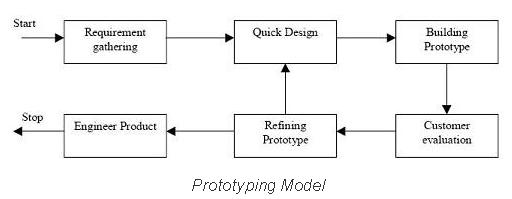
5. How can design research be communicated/presented?
I think prototypes is a good way to show design research because it gives the users a way of experiencing the concept in another way then just through text or drawings.
PART 2
How does a collaborative setting differ from a single user setting as regards methodology used and the results obtained?
A collaborative setting is when there are two or more participants during the testing; and a single user setting is then when there's only one participant at a time. I think it can be harder to analyse the result from a collaborative setting due to the fact that you have to look at all participants at the same time and see how they interact. The participants can also affect each other during the test when collaborating which can be both positive and negative.
A collaborative setting is when there are two or more participants during the testing; and a single user setting is then when there's only one participant at a time. I think it can be harder to analyse the result from a collaborative setting due to the fact that you have to look at all participants at the same time and see how they interact. The participants can also affect each other during the test when collaborating which can be both positive and negative.
How can qualitative and quantitative methods in the same study complement each other?
I think it’s good to combine both qualitative and quantitative methods in a study! I think you should start by doing a quantitative method to get the understanding in a broader perspective when doing research and then go into some depth with qualitative methods on some parts of the subject.
How can using both subjective and objective methods give a better understanding of a phenomenon?
This seems to be almost the same as using qualitative and quantitative methods... The subjective (qualitative) data is data that is experienced or perceived through our senses while the objective (quantitative) data is numerical information through statistics and testing. The subjective method therefore seems more personal like a qualitative interview while the objective methods seems to fulfill the gap where we need some covering numbers on the broader perspectives as from quantitative surveys with a lot of people answering questions later used for statistics.
Proof of concept: http://www.techopedia.com/definition/4066/proof-of-concept-poc

Inga kommentarer:
Skicka en kommentar