Visar inlägg med etikett tmm14. Visa alla inlägg

torsdag 16 oktober 2014

The Final Post - and the importance of looking from different perspectives

I made a Google Docs with links to the comments I’ve made during the course and also pasted the actual comment underneath it. Unfortunately I wasn’t aware that we were supposed to make comments from the start, so some of them are posted a couple of weeks after they were supposed to be. This, on the other hand, could be good in the sense that I had learnt more about the subject when commenting! I also wasn’t aware that we were going to compile the comments in this way, so I think that I have lost some of them, but that’s life on the vast internet! I have commented about 2-4 comments each week (and some additional that unfortunately are lost) so I guess that I’m aiming for the grade C.

However, here is the link for the Google Docs, and I’ve made it commentable for everyone with the link so feel free to comment there as well if you like to! But I rather get more comments here on the blog since it’s easier to have all in one place so to speak! :)

So, this is going to be my final post for this course. It will consist of some reflections of the course and what I’ve learnt about combining different methods in order to answer complex research questions.

I’ve always thought of myself as a person that doesn’t like to write (or read), but during this course I’ve started to enjoy writing and reading. I don’t consider myself as a good writer (yet), but I think that it’s something one can continue working on the entire life! As for reading, it has been fun reading others’ blog posts. Many of my fellow students is really good at writing which have made it a good way for me to experience new ways of expressing myself in writing and I've learnt a lot of new words and expressions.

But what have I learnt about combining different methods in order to answer complex research questions then?

I would say that theme 4, 5 and 6 has been the most hands-on themes from which I have learnt specifically methodological knowledge. Theme 1, 2 and 3 was more background to what knowledge, theory and critical thinking really are, which also has been needed in the course when discussing the different methods and what each of them contributes with.

When starting at theme 4 on quantitative studies with Olle Bälter we also got into qualitative studies in a natural discussion flow. It’s often easy to start comparing the two types of methods. I think a combination of these two are always to prefer. They complement each other in good ways.

This was some of the pros with quantitative and qualitative methods that we discussed during the seminar:


I’ve also learnt that it’s good to use qualitative methods when researching a relatively new subject to get qualitative results for others to use in further research later on. However I still think it’s good to also use quantitative methods as a complement to get an overview of how the masses responds to the questions of the research. It’s also often a good way to get statistics that can be presented graphically, which I like when reading a research paper. It often makes it more easy to grasp.

The most important methodological knowledge I learnt when continuing on to theme 5 was the importance of defining the problem. I also learnt that the divide of time often is quite unfair. Haibo said that 10% of the time is placed in the defining and almost 90% goes to solving the problem. If we instead put more effort into the defining of the problem the solving hasn’t got to take that much time and we can actually find a simpler solution. I think this way of thinking also is applicable for using methods in a research. If you start by putting more effort into defining your research then you can see more clearly what methods you should use or what to ask, and then it also can be more time efficient, because you might realise that you were about to use almost redundant methods. Haibo also said that to define a problem properly you should look at it from different point of views, which also can be connected to the profitability of using different methods when doing a research. It will give the research more inputs and open it up for more solutions, or experiences.

Here is a really short video of one who knows how to approach things from another perspective that I think you'll enjoy: http://instagram.com/p/uLFkRejJyo/?modal=true

Theme 6 was a bit confusing at first, but I think I have gotten a more defined view of what a case study research is. The whole method of case studies is building upon using different methods in order to explore and drag conclusions from real life complex phenomenon. What I’ve learnt from this theme is that a case study is based on a real problem, uses different methods and that it’s inductive and doesn’t have any prior hypotheses but rather depend on the experience that is gained during the research. I also really liked the Eisenhardt text and think it will be good to use it when doing a case study research, to be sure to get all the components needed for a valid research.


The most challenging parts of the course were probably theme 1 and 2. I've written, in my Reflection after Theme 2, "You need to seek the truth by logical arguing but also by looking at the object from different perspectives" and also "When discussing Adorno & Horkheimer we talked about a gap between the existing and the possible ("A society that we live in, and a society that we want to live in") and that we need to change the way we think to change the society". I found this interesting now when reading it again. I see this course as an eye-opener in the sense of the importance to look at things from different perspectives, thinking in different ways and thereby using different methods also fit nicely into the picture. (I also got a lot of interesting comments on that particular post, which you can read more about in the comments compilation.)


All in all, I think I've learnt a lot more than that I can think of right now, and I hope that all we have discussed will stick with me and that I get chances to develop these thoughts further in coming courses.

I guess that's all for now, and thank you who have read my postings and commented all your cleaver comments!

//Malin Bokström

onsdag 15 oktober 2014

Reflection after Theme 6

This last theme was about qualitative and case study research, but mostly case study research since we had more trouble understanding what differed a case study research from other “ordinary” research. I understood a case study as method that can take something that aren’t seen as reality yet but make a concept of it to make it real. Hm, that was a bit “messy”.

We started talking about that a case is something that is out there in the real world; it can be a company in crisis, a medical patient with a set of symptoms, a criminal case, etc. They all have a given natural delimitation. The researcher can also sometimes put their own limitations on something that they want to prove is a case, and make a research about it. That is a way for new phenomenon/cases to appear - if the concept they find is accepted as “real”.

When we talked about theory in the beginning of the course we also discussed what theory is not. We did this on the seminar as well. A user study is for example not a case study, unless it focuses on a real life problem with real users. Another example can be a market survey or inquiry since it's only telling us what is.

So a case study research is a research about something already naturally limited complex phenomenon, or it’s a research about what the researcher believes is a new coming phenomenon and then he limits it himself. During the research you use different methods that you think is appropriate for the research.

Finally we came to three pinpoints of what a case study research is:
  • It’s something that exists in the real life with a natural limitation.
  • It uses different methods.
  • It’s something inductive - no starting hypotheses and drags conclusions of experience. 
I also commented on something from the Eisenhardt article - that for a case study to be valid it should have 4-10 cases. My chosen paper had 3 cases, and I thought it was valid for the area it looked upon. What Eisenhardt meant was that it's often necessary with a bit more cases to really be a valid research. Leif also said that it has been “experienced” that the difference of validation (not sure what to call it..) is between a few and many cases, and it has been shown that 3 cases is “a few” and 4 or more are “many”. We also had a little side note about the program “Fem myror är fler än fyra elefanter”. The fifth ant makes the ants a majority even though they are much smaller than the elephants, and therefore maybe also more valid in the cases situation.


måndag 13 oktober 2014

Reflection after Theme 5

This weeks lectures got rescheduled so it feels a bit divided and far apart. So now we've already read and handed in the 6th theme but we still have the last lecture for theme 5 (with Haibo Li) this afternoon.

First of, sadly I don’t know if I learnt so much from the first lecture. I was a bit disappointed actually. I think her texts were really interesting and I have talked a lot about them with both family, friends and fellow students. But the lecture was more of a recap of the articles, so it didn't really feel like it mattered if one had read them or not, and I didn't get so much further understanding of the theme from going to the lecture - it felt a bit redundant so to speak. But maybe it was my anticipations that were too high?

However, she talked about how the research design affects the research which I hope that Haibo also might talk a bit more about today! She sometimes had to train participants in her research for the tasks that they were supposed to test, so they were acquainted with the system before doing the task. But then she argued that they might need other participants for other tasks in the research and then they needed to give them some start up training in the system as well. The result will probably be different if using the same participants for all the tasks, compared to if using different participants for different tasks. Which method to use is of course then depending on the research.


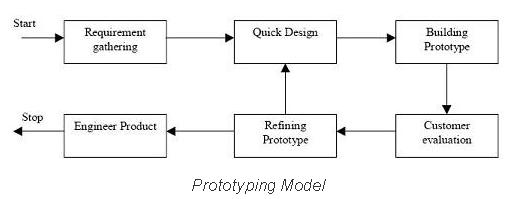
Haibo Li’s lecture was really inspiring, as usual! He talked about getting from an idea to a prototype or product. To do this he had five bullet points:
  • How to come up with an idea? 
  • How to filter the ideas? 
  • How to validate an idea?
  • How to evaluate an idea?
  • How to communicate your idea?
He also talked about problem solving, and that it’s equally important to define the problem as it is actually solving it. You can find much easier solutions with a good definition of the problem. However, we are often locked to our "usual" problem solving methods so it might be hard to look outside the box for the most simple solutions.

Finally, Haibo talked about that even when you have defined your problem, you have found a solution, you have validated it through proof of concept and evaluated some prototypes or so on. But then you need to communicate the idea! It is as important as the other steps and you then need to show that you care about customer satisfaction. You should be able to explain in what way your product do so as fast as the doors of an elevator opens and closes (the elevator pitch).

We also watched the first 3 minutes of this clip to get an understanding of what problem solving can be, and that there are several solutions to all obstacles.

torsdag 9 oktober 2014

Theme 6 - Qualitative & Case Study Research

Okay, so since I accidentally chose a paper with qualitative methods during the quantitative theme I thought that I could use it now as well, when it actually fits the theme! (It fortunately had a quantitative method as well of course..) So I chose the text "Facebook and Online Privacy: Attitudes, Behaviors, and Unintended Consequences" from the journal of Computer-Mediated Communication with an impact factor of 2.019.

1. Which qualitative method or methods are used in the paper? Which are the benefits and limitations of using these methods? 
The qualitative method of this paper was "open-ended in-depth face-to-face interviews" with eight of the respondents from an earlier quantitative online survey. "The interviews were recorded, transcribed, and then analyzed through a combination of qualitative content analysis, typological reduction analysis, and hermeneutical/rhetorical interpretation."
The benefits of an open-ended interview is that the respondents might get into subjects that you as a researcher never would have thought about asking and therefore you gain new interesting answers. It can also be limiting if the respondents get to far away from your main questions, but that is also your responsibility as the interviewer to control. Face-to-face is beneficial in a way that you can see the respondents facial expressions and body language which helps with the conversation. It's easier to misunderstand each other without the face-to-face interaction in a dialogue.

2. What did you learn about qualitative methods from reading the paper?
I haven't thought so much about how to pick which respondents to conduct the interviews before. I think we only took some when doing our bachelor essay. I realize now that it might not have been so good. When looking for qualitative and topically relevant answers it's better to chose respondents that has good answers and not do a random select.  

3. Which are the main methodological problems of the study? How could the use of the qualitative method or methods have been improved?
Methodological problems include concerns about reliability, validity and dependability of data, results, conclusions and generalizations in a research enterprise. I think this study is a quite generalize one and they get the answers they seem to be searching for and thus I think that there aren't any great problems. I think it's good that they are using both quantitative and qualitative methods in the study and I don't know how they should have used the qualitative methods in other ways. They did a good job, confirmed what others also had found and the workload seemed reasonable.

Part 2:

For part 2 I chose the paper "Social media competitive analysis and text mining: A case study in the pizza industry" with an impact factor 2.042

1. Briefly explain to a first year university student what a case study is.
A case study is a way of using a single or several examples of “real-life” phenomena, events or persons to analyze and consequently derive conclusions. Case study research are generally aimed to use cases to “provide description, test theory, or generate theory”. (From www.kth.se)
In my own words I would say that a case study is often when you observe people doing a task in real life for you to gain knowledge about some explicit part of the task. 

2. Use the "Process of Building Theory from Case Study Research" (Eisenhardt, summarized in Table 1) to analyze the strengths and weaknesses of your selected paper.
They are defining the research questions and the target group early in the case which is good. They have chosen the three largest US Pizza chains (Pizza Hut, Domino’s Pizza and Papa John’s Pizza) and show arguments for why this industry is relevant to do the case around so it's not only "random sampling", and then they specify three research questions to answer. 

They also used methods for multiple data collection. They looked at quantitative data about the Pizza chains from their social medias (such as #followers, #likes, #shares, #postings...) and then applied different text mining analysis on the text messages. I think they also do well during the "Analyzing data" and they do both within-case analysis and cross-case analysis.

I couldn't find so much of shaping hypotheses or overlapping data collection and analysis during the case nor so much comparison with conflicting literature. They also had a "pre-defined" ending with only 3 cases but it seemed to be enough for them, although the Eisenhardt text said that it was best to have about 4-10 cases, so maybe this case research isn't as "valid" as it could have been...but I'm not sure, we can leave that as a question for the seminar!


Facebook and Online Privacy: Attitudes, Behaviors, and Unintended Consequences: http://onlinelibrary.wiley.com/doi/10.1111/j.1083-6101.2009.01494.x/pdf
Methodological issues: https://uk.answers.yahoo.com/question/index?qid=20110310100631AAFNbNn 
Case Study research: https://www.kth.se/social/course/DM2572/page/case-study-research/
Building Theories from Case Study Research: http://www.jstor.org.focus.lib.kth.se/stable/258557
Social media competitive analysis and text mining: http://www.sciencedirect.com.focus.lib.kth.se/science/article/pii/S0268401213000030

fredag 3 oktober 2014

Theme 5 - Design Research

Part 1 - “Turn Your Mobile Into the Ball”
1. How can media technologies be evaluated?
In the article they are using usability evaluation that are considering evaluation for Effectiveness, Efficiency and Satisfaction. This is done through user testing by calculating the error-rate when users try to understand the vibration-impulses, by calculating the cognitive delay-time and through questionnaires regarding if the user experienced the tests as positive or negative.
2. What role will prototypes play in research?
Prototypes is a good way to test your idea, and to physically see what is good or bad with it. It’s also a very concrete way of finding out if anything wasn’t experienced as you thought it would be and what problems that occurs. It’s also good for you as a research group to make a prototype to see that you all have the same thing in mind, words may often be misinterpreted and then it’s good to put your ideas into a prototype.
3. Why could it be necessary to develop a proof of concept prototype?
Proof of concept is a demonstration that is used to know whether or not this research or product is worth developing. Does it have potential for real world application? This is necessary because otherwise you might make a product that works well but the users may not know how or why to use it and then it’s redundant.    
4. What are characteristics and limitations of prototypes?
A prototype is a way of showing some of the functionalities that the finished product will have. Prototypes is good in the way that they increase user involvement during the developing state of production and that often makes it less time-consuming and you often find problems faster which makes it less costly. The limitations is that the testing users might think that the prototype should represent the finished product when it actually is a way of testing out some of the functions, and far from done. This might affect the users evaluation.
5. How can design research be communicated/presented?
I think prototypes is a good way to show design research because it gives the users a way of experiencing the concept in another way then just through text or drawings.
PART 2
How does a collaborative setting differ from a single user setting as regards methodology used and the results obtained?

A collaborative setting is when there are two or more participants during the testing; and a single user setting is then when there's only one participant at a time. I think it can be harder to analyse the result from a collaborative setting due to the fact that you have to look at all participants at the same time and see how they interact. The participants can also affect each other during the test when collaborating which can be both positive and negative.
How can qualitative and quantitative methods in the same study complement each other?
I think it’s good to combine both qualitative and quantitative methods in a study! I think you should start by doing a quantitative method to get the understanding in a broader perspective when doing research and then go into some depth with qualitative methods on some parts of the subject.
How can using both subjective and objective methods give a better understanding of a phenomenon?
This seems to be almost the same as using qualitative and quantitative methods... The subjective (qualitative) data is data that is experienced or perceived through our senses while the objective (quantitative) data is numerical information through statistics and testing. The subjective method therefore seems more personal like a qualitative interview while the objective methods seems to fulfill the gap where we need some covering numbers on the broader perspectives as from quantitative surveys with a lot of people answering questions later used for statistics.


torsdag 2 oktober 2014

Reflection after Theme 4

I think this seminar/workshop was a little confusing but still very interesting. We got to come up with pros and cons regarding both quantitative AND qualitative methods although this weeks theme was Quantitative Methods.

The tasks during the seminar was fun and I thought it was a little ironic that it was the qualitative answers we got points for and not the quantitative. So one could think that Olle Bälter wanted to promote qualitative methods before quantitative, because it was the qualitative answers that were rewarding and they are often obtained through qualitative methods…

Anyway, the most practical experiences I’m taking with me from the seminar is the way to construct a survey for example:
  • You should always have a odd number of boxes if the respondents are to answer some question of which degree they are agreeing or disagreeing so they have the opportunity to be neutral. 
  • Do not have statements that can be interpreted or answered in two ways such as “Some people wander aimlessly through life, but I’m not one of them”.
    If I disagree then what am I disagreeing with? Do I think that some people do wander aimlessly and that I am one of them, or do I think that every person do have a plan?
We also discussed much about web questionnaires vs paper questionnaires. I think that web seemed like the best option most of the times, but paper has it’s profits as well and it shouldn’t be forgotten. Web has the strong advantage of getting the answers digitally at once which makes it easier to compile and the one thing that Olle pointed out (which seemed to be one of the most important parts) were that web is safer due to the lack of middlemen!

torsdag 25 september 2014

Reflection after Theme 3

This week has been about Theory and Research, but mostly theory if you ask me. Most of the seminar was about discussing what types of theories we had found in our chosen research articles. It was clear that we hadn't fully understood the different types from table 2.


I have learnt that the types from I-IV are different levels of theory complexity. Type II do often contain of type I and so on... Type V seemed to be a "type of its own", and also a more concrete type. We talked a lot about type III Prediction and how it differs from only regular assumption. Prediction is when you have made a research and then at the end can say that "from this we can see that it will be like this". Then you have predicted something that are going to happen, not only what you think might happen.

I also think this week wasn't as abstract as previous weeks, which was comforting. I also liked that we got to chose the article by our own because it's more fun to read about something you have chosen because it genuinely interests you, than just a given text. It was also fun to hear about what articles the other students in my group had chosen and to see our different range in interests, although we are all in the same study program.

Theme 4 - Quantitative Research

Facebook and Online Privacy: Attitudes, Behaviors, and Unintended Consequences

I chose the text "Facebook and Online Privacy: Attitudes, Behaviors, and Unintended Consequences" from the journal of Computer-Mediated Communication with an impact factor of 2.019.

Which quantitative method or methods are used in the paper? Which are the benefits and limitations of using these methods?
The quantitative method used where an online survey (with additional qualitative interviews with 8 of the survey respondents). The online survey, or questionnaire, was answered by 119 collage students at a university in Midwestern United States. It was consisting of 36 multiple-choice questions about their basic habits on Facebook but also about what personal information they share on their profile including how they had set up their privacy settings and what benefits or risk they saw in usage of Facebook.

This method gives a very generalized view of the specific target group (in this case, under graduate collage students in the Midwestern United States). The limitations might be that you need to get very many respondents to be able to draw any conclusions, and you won't get the qualitative aspect of the questions.

What did you learn about quantitative methods from reading the paper?
They seemed to have a lot of questions in the questionnaire, and I know from our "kandidatexamensarbete" that it's really important to ask the right questions. I think it's easy to ask redundant questions that wont help you to your goal, but they seem to have had questions to answer their hypothesis! I wonder though if they used all of the questions asked or if they could have left some out...  

Which are the main methodological problems of the study? How could the use of the quantitative method or methods have been improved?
Methodological problems include concerns about reliability, validity and dependability of data, results, conclusions and generalizations in a research enterprise. I think this study is a quite generalize one and they get the answers they seem to be searching for and thus I think that there aren't any great problems. I think it's good that they are using both quantitative and qualitative methods in the study. If they should improve the quantitative method then they could have had more respondents and maybe only focus on a smaller target group in a specific age-range or so. 

Physical Activity, Stress, and Self-Reported Upper Respiratory Tract Infection


Which are the benefits and limitations of using quantitative methods?
In the article "Physical Activity, Stress, and Self-Reported Upper Respiratory Tract Infection" they used a quantitative web questionnaire with follow-up questionnaires sent out through e-mail. 
The benefits of this was that they could send it to a large number of people who could answer it fast and easily. The limitations is as I said earlier that you don't get the depth as you would with qualitative methods and some respondents might not understand all questions or answer them incorrectly. 

With this method they could come in contact with 5000 people at once, and of which 1111 had answered all of their questionnaires!

Which are the benefits and limitations of using qualitative methods?
The benefits are that you can get really deep answers from a fewer range of people, but it's often more time consuming with qualitative methods than quantitative. Qualitative methods might be harder to draw any general conclusions of compared to quantitative methods. 


PDF version: http://onlinelibrary.wiley.com/doi/10.1111/j.1083-6101.2009.01494.x/pdf 
HTML version: http://onlinelibrary.wiley.com/enhanced/doi/10.1111/j.1083-6101.2009.01494.x/ 
Methodological issues: https://uk.answers.yahoo.com/question/index?qid=20110310100631AAFNbNn 

torsdag 18 september 2014

Reflection after Theme 2

For this theme I have read two texts: The Work of Art in the Age of Technical Reproduction by Walter Benjamin and Dialectic of Enlightenment by Adorno & Horkheimer. I then answered a couple of questions connected to the texts.

During the lecture with Henrik Åhman we got some context of the environment the philosophers had been living in while writing these texts. It was really interesting but it was also hard to see the connection to the texts sometimes.

I also noticed that I hadn't fully understood the concept of dialectic but it got clearer when talking about different dialectical concepts such as Artist - Photographer; Aura - Mass culture; Unique - Many; Picture - Copy; Myth - Science. You need to seek the truth by logical arguing but also by looking at the object from different perspectives.

We also had a seminar where we brought up different concepts we thought was difficult to grasp from the texts and the lecture and then answered some additional questions in smaller group (3 or 4 people) to then discuss our answers as a whole group again.

When discussing Adorno & Horkheimer we talked about a gap between the existing and the possible ("A society that we live in, and a society that we want to live in") and that we need to change the way we think to change the society. We also discussed that both Art and Media Technology help changing the society to connect those thoughts with Benjamin's text.

We also talked a lot about nominalism - and that it may lead us to being stuck at only describing the society as we see it now. That may not be the way we want it to be. We need to complement it with the conceptual thinking, for the society to evolve into something we want it to be.

We also discussed nominalism vs realism with Plato's Allegory of the Cave, which was really interesting (but we did this in swedish and I'm not sure how to translate it into english now..). It's like all we see are a shadows of the real object that is somewhere else. All objects are formed after an idea of that object.

Bild: http://www.ieet.org/images/uploads/424db0.jpg 

Theme 3: Research and Theory

I've chosen the article "A very popular blog: The internet and the possibilities of publicity" by Brenton J Malin from the journal "New Media and Society". This journal has an impact factor of 2.052.

The journal describes two modes of publicity, openness and promotion, and their implications on traditional broadcasting versus online communication. She argues that the discussions of the democratic potential of the internet needs to take these questions of publicity in serious consideration.

"These two understandings of publicity, as openness and as promotion, capture two problems of democratic communication. The more open a channel of communication, the more diverse opinions it can include, but the less clearly it can focus attention on any particular topic.” “On the other hand … focussed communication risks flattening discussion into a homogenized message that excludes alternative points of view.”

She describes the importance of traditional television over other digital media for promoting parties during elections in the USA, and also how the television affects the viewers knowledge and opinions when viewing late night programs, such as The Daily Show, regularly. The TV focuses the attention and the Internet seems to be dispersing it. To get people to see your content on the Internet is much harder than just to broadcast it out on a popular television channel - you need your visitors to find you on their own way.

She also talks about using social media or more specifically Facebook as a broadcasting media. When using Facebook you are both a producer and a consumer. So it goes in both directions. There are however people, as for example Obama and Ashton Kutcher, who gather an enormous number of followers and then use Facebook as a broadcasting channel.

In the conclusion she says that "Only by allowing both a publicity of attention and a publicity of openness in the mainstream media can we hope that both can also flourish online."

1. Briefly explain to a first year university student what theory is, and what theory is not.

Theory is a generalization of a phenomenon and the causation of it. Why did the phenomenon happen and how are we to explain it in an abstract or generalized way? 

I also found this quote on the course web regarding theories: "Theory is about the connections between phenomena, and explaining WHY, HOW and under WHICH circumstances acts, events, structure, and thoughts occur. Theory attempt to explain the causal logic between cause and event."
Theory is not references, data, list of variables or constructions, diagrams and hypotheses. The theories are, on the other hand, supported by diagrams and data, etc.
In the text "What Theory is Not" it says that data is required to describe which empirical patterns are observed, but theory on the other hand is why these empirical patterns are observed or are expected to be observed. I thought it was a good example and it shows that it isn't the facts or the diagrams that are theory - it is the underlying meaning that you get from the data and the explanation of why that data emerged.

2. Describe the major theory or theories that are used in your selected paper. Which theory type (see Table 2 in Gregor) can the theory or theories be characterized as?

I would say that the theory type used in "A very popular blog: The internet and the possibilities of publicity" is mostly Explanation or maybe a little of Design and Action. Brenton is mostly only explaining what is now and it isn't tested or predictive. But I thought that it might be a little of Design and Action (if I understood that type correctly) because she tells us to take publicity in regard and that we need to discuss this matter when talking about democratic possibilities of the internet and in traditional media. But she doesn't really give us explicit prescriptions...

"Discussions of the democratic possibilities of the internet need to explore the ability of particular sites to build publicities of both openness and promotion and to analyze these within the context of the wider media environment"


3. Which are the benefits and limitations of using the selected theory or theories?

The limitations of these theories might be that they haven't looked on what is going to be and it doesn't feel as "deep" as it would have done if it had been for example Explanation and Prediction. The benefits might be that the article now has caught someone's eye who then can start digging into it a little deeper.


Sources other than the given texts:
http://nms.sagepub.com.focus.lib.kth.se/content/13/2/187.full.pdf
https://www.kth.se/social/course/DM2572/page/what-is-theory-2/

fredag 12 september 2014

Theme 2: Critical Media Studies

1. Dialectic of Enlightenment
a. What is "Enlightenment"?
Enlightenment is described as "the advance of thought" or in other words: knowledge. This enlightenment has been important for us human beings to establish ourselves as "the masters" and gain distance from our fears, or in this case even myths.  

b. What is "dialectic"?
Dialectic is a kind of discussion form where you try to find out what is true. This is done by logical argumentation and reasoning. This is what the enlightenment is about. To find a logical reasoning of what and why things are true.

c. What is "nominalism" and why is it an important concept in the text?
Nominalism is the opposite of realism and may be two things: either it says that universal entities/objects (eg. strength and humanity) doesn't exist, or it says that abstract objects (objects that doesn't exist in time and space) doesn't exist. This means that only physical object exists but some versions of nominalism also admits that some particular abstract objects do exist (like numbers).
It's an important concept in the text because nominalism says that myths or other unnatural things without scientific explanations aren't true, and are therefore in line with the enlightenment.

d. What is the meaning and function of "myth" in Adorno and Horkheimer's argument
The "myths" were the explanation to everything.They where the truth if we couldn't explain it in any way! And that may have risen a kind of fear in us. The enlightenment gave explanations to the myths and we therefore became masters of the fears/myths.


2. "The Work of Art in the Age of Technical Reproductivity"
a. In the beginning of the essay, Benjamin talks about the relation between "superstructure" and "substructure" in the capitalist order of production. What do the concepts "superstructure" and "substructure" mean in this context and what is the point of analyzing cultural production from a Marxist perspective?
Superstructures is developing much slower than substructures, and that is because substructures are affecting the development of superstructures. Substructures are the production for example paintings, theaters, movies, sculptures. Superstructures are everything that contains of the substructures such as the society, art, religion, laws and culture. The substructures are therefore the base, and if the base is good the superstructure (or the society/culture) which grows from it will also be good.

b. Does culture have revolutionary potentials (according to Benjamin)? If so, describe these potentials. Does Benjamin's perspective differ from the perspective of Adorno & Horkheimer in this regard?
Benjamin saw revolutionary potential in example photography and films. They have changed the cultural industries and the views of the world becomes more easily accessible throughout the world.
Adorno & Horkheimer likes the new technologies and to be able to spread the enlightenment whereas Benjamin doesn't like technology in terms of creating art. A photography isn't true art in the way as an original painting is. But at the same time it is making room for new types of art, but I don't think Benjamin see it that way. He doesn't seem to think that a photograph is unique and therefore it don't have the same aura as "original" art objects.

c. Benjamin discusses how people perceive the world through the senses and argues that this perception can be both naturally and historically determined. What does this mean? Give some examples of historically determined perception (from Benjamin's essay and/or other contexts).
Natural perception is the perception we are born with. It is the perception of the world we have through our senses and therefore it is also individual. But history or historical events can also have an effect on how we perceive the world, and that is what historical perception is. An example may be war or epidemics of dangerous deceases (like the plague).

d. What does Benjamin mean by the term "aura"? Are there different kinds of aura in natural objects compared to art objects?
Benjamin says that aura is the "unique phenomenon of a distance". I didn't understand that completely but he also brought up examples of the natural aura and the arts aura. The natural aura was as if a regular branch cast it's shadow over you, then you felt the natural aura of the branch. And the arts aura had to come from unique art, such as the Venus statue, and is what you experience when you look at it. So the aura in arts is different from the natural aura in that way that it's only experienced if the thing is a unique artpiece. But all things can have a natural aura.


http://knowledge.sagepub.com/view/power/n360.xml
http://en.wikipedia.org/wiki/Nominalism 
http://plato.stanford.edu/entries/nominalism-metaphysics/
http://dictionary.reference.com/browse/dialectic

torsdag 11 september 2014

Reflection after Theme 1: Look at the World as a Structure of Meaning

This week has been a long journey for me and my confused scientistic head. I am not used to read as difficult texts as these, nor of thinking in this "philosophic" way. I got really frustrated with Kant's text as I couldn't understand it. It made me confused and one second I thought that I finally understood it, but the next I was totally confused again, so that has been really annoying. Plato's text was more understandable in some ways. It was easier to understand Socrates arguments when they were directed towards another person.

I'm a very slow reader so I didn't read all of Plato's, but I read the first third about if perception really is knowledge and then I actually read a summary of the rest. It worked well and the summary I used was quite long and detailed so it didn't loose much of the context. I didn't understand much from Kant's language though so I just read as far as to the posed question and a few more pages. Then I had to read them over and over again to understand what he was even talking about. Then I discussed my raised questions among friends and tried to simplify the words to understand the meaning of the sentences. But it was really hard!

The lecture we had with Johan was also confusing. It started out well with some basic subjects like naturalism vs. scientism and technological vs. mechanical worldviews, but once we got into Kant's question of how is it possible to know something about the world a priori, then I got lost again... The seminar on the other hand was good! During the seminar we discussed that Kant was trying to give us the forms of understanding so that we can gain knowledge about the world. Kant said that knowledge about the structure of the world is really knowledge about the world. It's not only knowledge about our representation of the world, but it is the world. And we need to look at the world as a structure of meaning. The world isn't just a thing that is totally independent of us.

Then we continued on to "we don't see with our senses but through our senses". And we had a good example of this during the seminar: On one hand you can hear, but on another you can listen. I think that was a really good explanation! Then the quote "perception without conception is blind" was brought up and I think you should look at it as if to put the senses in a concept and give it meaning. that is how we see through our senses.


I hereby have to sentences that I'm going to remember from this week:

Learn to think in terms of meaning(forms) instead of fact
&
Look at the world as a structure of meaning

fredag 5 september 2014

Theme 1: Theory of Knowledge and Theory of Science

1. In the preface to the second edition of "Critique of Pure Reason" (page B xvi) Kant says: "Thus far it has been assumed that all our cognition must conform to objects. On that presupposition, however, all our attempts to establish something about them a priori, by means of concepts through which our cognition would be expanded, have come to nothing. Let us, therefore, try to find out by experiment whether we shall not make better progress in the problems of metaphysics if we assume that objects must conform to our cognition." How are we to understand this?

There are two different kinds of knowledge, a priori and a posteriori. A priori is knowledge that doesn't require any experience. It is the knowledge that you know is true without further exploration, such as all homosexual men are attracted to men. A posteriori knowledge on the other hand is knowledge that needs to be confirmed through experience, like all homosexuals are "feminine".

Kant says that it has been thought that our cognition must conform to objects. Which means that we can't have knowledge about objects before we have some sort of experience about them. We can't just sit at home and think that we have knowledge about the outside world without experiencing it.

He then takes another view and says that we should assume that the objects must conform to our cognition. This means that we must use our knowledge in order to understand the objects. You should therefore look at problems from another perspective, like Copernicus. Copernicus tried to understand the celestial motions by putting the earth in the middle and that the sun revolved around us, but didn't succeed. So he changed his point of view and put the sun in the center for us to revolve around!

I think that knowledge should be viewed as a combination of the two. We need to combine our experiences with looking at objects from different perspectives to truly know something.

2. At the end of the discussion of the definition "Knowledge is perception", Socrates argues that we do not see and hear "with" the eyes and the ears, but "through" the eyes and the ears. How are we to understand this? And in what way is it correct to say that Soctrates argument is directed towards what we in modern terms call "empiricism"?

Socrates argues that we do not see and hear "with" the eyes and the ears, but "through" the eyes and the ears. He is trying to show us that the senses are connected to a bigger picture so to speak. The eyes and ears are only examples of instruments that are all connected to the mind for us to be able to perceive "objects of sense". We then also perceive different senses through different organs but we can not compare the senses with one another, or link them together to know what differs without a mind or connection point of some sort.

Socrates also asks what bodily organ that perceives other universal notions like being or not-being and likeness and unlikeness. Theaetetus then answers that these notions differs from the other objects of sense and that they doesn't have any separate organ, but the power of the mind.

All objects of sense and universal notions must therefore be connected together by the power of the mind for it to be understood by us. We can not only understand thing by looking at it with our eyes. We need to look at it through our eyes and combine that experience with something more to understand it.

"SOCRATES: The simple sensations which reach the soul through the body are given at birth to men and animals by nature, but their reflections on the being and use of them are slowly and hardly gained, if they are ever gained, by education and long experience."

As quoted above we need to use the senses through our organs in to the soul, but also to reflect on the being and the use by education and experience. It is the part about the accompanied experience that I think makes it directed toward the modern empiricism. Empiricism is based on that the only knowledge is what has been given proof of by observations or experiences. And Socrates is saying just that. That collecting the objects of sense is an ability all men are born with, but then we need to make observations (by example education) or gather experiences to really reflect and understand the knowledge we assume we have.